
#63: You Cannot Read the Same Book Twice

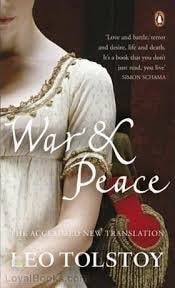
I am immersed now in Tolstoy’s epic story, War and Peace. And not for the first time. I have three different volumes of the story: a double volume Penguin Classics paperback, printed in 1968 when I was at school; a Folio Society hardback published in 1978 when I was a young man; and a single volume Pocket Penguin Classic paperback printed in 2006 when I was middle-aged. I bought it in December 2009. The first two volumes use the same translation by Rosemary Edmonds © 1957. It is superb and modern; but then, so is the translation of the third copy, by Anthony Briggs © 2005.
What is going to sound like a brag, is not: it is relevant to the hypothesis in my story. I have lost count of the number of times I have read the book, War and Peace. The first volume is well-thumbed and must have been read at least three times, at school, university, and my early days in South Africa. The second one, the Folio, I will only have acquired in the 1980s and will have read it at least twice in the 1990s and 2000s while my children were growing up, going to school, and so on. The third volume I can remember having read at least four times, once every three years in the last eleven or so years. This memory means I am now reading the story for the tenth time. And it is a towering read, all fourteen hundred plus pages. Oh, and I have watched all three films made in my lifetime, and twice watched the recent BBC Wales series. I guess you could say I am a fan.
Why? Why is a man like me, interested in diverse topics, engrossed in contemporary events, an eclectic reader, attracted to fiction and non-fiction alike, eager to uncover truths from whatever I am reading, now reading the same epic fiction for at least the tenth time – and looking forward to re-engaging with it again in a few years’ time? A good answer exists, and it is related to the title of this article. First, let us allow Tolstoy the voice.
The wolf hunt is legendary – fast pace on horseback and in text, the onset of winter for a day’s hunting in the country-side far from Moscow, and many natural touches, such as the passionate loyalty of the head huntsman and his child-like pleasure in the hunt, and the neighbouring farmer, Ilagin, whom young Rostov,…
‘never a man for half-measures when it came to judgements and feelings and having heard that their neighbour was an obstinate brute, he loathed him with every fibre of his being and considered him his bitterest foe. All worked up and spitting with rage…he saw a stout gentleman in a beaver cap coming towards him on a splendid black horse. This was no enemy. Rostov found Ilagin to be an impressive gentleman of great courtesy, particularly anxious to make the young count’s acquaintance’. (A. Briggs translation).
They have already hunted wolf and fox; now these two chase a hare which in a great competition is accounted for by the hound belonging to Rostov’s host, Uncle. Dusk falls. The Rostov party repairs to Uncle’s home, not splendid but comfortable, warm, and homely. They meet Anisya, Uncle’s partner and housekeeper, whose...
‘eyes radiated goodwill and her every gesture spoke of warm hospitality as she looked round all the guests and treated them to a broad smile and a polite curtsey’.
Natasha Rostov, Nikolay’s sister and the leading female figure in the fiction, is present. Uncle invites her to dance, there on the sitting room floor:
‘Natasha threw off the shawl she had been wrapped in, ran round in front of Uncle, and stood there waiting, hands on hips, rhythmically jiggling her shoulders.
Here was a young countess, educated by a French emigre governess – where, when and how had she imbibed the spirit of that peasant dance along with the Russian air she breathed, and these movements which French ballet lessons ought to have squeezed out of her long ago? But her movements and the spirit of them were truly Russian, inimitable, unteachable, just what Uncle had been hoping for. The moment she took up her stance with such a confident smile, so proud of herself and full of mischievous fun, any misgivings in the audience that she might get it all wrong, were dispelled. Her dancing was perfection itself.’
The duel between Pierre Bezukhov and Dolokhov – over a slur by Dolokhov at Pierre’s wife, Helene – out in the Sokolniki woods captures the romantic bravura of two men walking towards each other in the mist in the snow, holding out loaded pistols pointed at each other. The less competent man, Pierre, not a soldier, is already mortified by humiliation and shoots first in a panicked manner. By a fluke he hits the target, Dolokhov, who falls but is not killed. Pierre leaps forward to help him; is warned back by the seconds; and Dolokhov sits up with his shot to come at Pierre, now no more than ten metres away.
‘Full of sympathy and remorse, Pierre stood gently smiling, with legs and arms helplessly outstretched and his broad chest fully open to Dolokhov. He looked down at him in great sadness. The seconds all winced, unable to cause Pierre to turn sideways as he could have. At that instant they heard a bang followed by an angry shout from Dolokhov. Missed!’
And the ball in 1808, attended by the Tsar, in a period of peace. The ball at which the fateful romance between Natasha, now sixteen years old, and Prince Andrei Bolkonsky flourishes. Tolstoy gets a young girl at her first dance perfectly;
‘It was then Natasha remembered how to behave on such an occasion, and she did her best to assume the majestic manner that she considered essential for a girl to adopt at a ball. But as luck would have it she was too dazzled to see anything clearly, her pulse thumped at one hundred beats to a minute and the blood rushed to her heart, so she was unable to strike a pose that might have made her look silly. She walked on, almost swooning with excitement and struggling to hide it. And this was the manner that suited her best.’
Natasha is at first worried that she may be a wall-flower, and then it is Pierre who introduces her to Prince Bolkonsky:
‘Andrei offered her the waltz. The timorous expression on Natasha’s face, poised between despair and ecstasy, changed at once into a blissful, girlish smile of gratitude.
‘I’ve been waiting so long for you’, came the message from that worried but happy young girl, a smile shining from her glistening eyes as she raised her hand to Prince Andrei’s shoulder. They were the second couple to walk out.
He was one of the best dancers of his day. Natasha danced exquisitely. And her face glowed with pure happiness. The moment he put his arm around that slender, supple, quivering waist, and felt her stirring so close to him and smiling so close to him, the champagne of her beauty went to his head. He felt a thrill of new life and rejuvenation.’
The recent BBC series caught this romance so well. All I had ever dreamt of in a first dance with a beautiful girl in splendid surroundings, the two actors portrayed. And the final word on the ball:
‘Then Natasha said: ‘I’m having the best time of my whole life!’ and Prince Andrei watched as she half-raised her slender arms as if to embrace her father, and dropped them again at once. Natasha was indeed having the happiest time of her life. She was at the very peak of happiness, when a person is transformed into someone completely good and kind, and rejects the slightest possibility of evil, misery, and grief.’
I have minimally described only three incidents in a long story. There are hundreds of others: some great battle scenes (again with the grounded touch) at Austerlitz and Borodino; wonderful family vignettes at the Rostov house; the tense relationship between Andrei and his ageing father; the destruction of wooden Moscow by the French troops who eventually run out of food and have to abandon their greatest ever prize; Pierre facing a firing squad and then a forced winter march as a prisoner-of-war; the base coward, Prince Kuragin, and his impact on Natasha; and always the thread of the simple things. I hope I have given you a sense of the magnetism of the fiction.
In the one hundred page Epilogue, Tolstoy writes:
‘There is no greatness where simplicity, goodness and truth are absent.’
This is the meaning of War and Peace. That the supreme aims for which man should live and work – simplicity, goodness, and truth – should overcome power which ignores simplicity and is rooted in evil and falsity. Tolstoy achieved this by crafting human beings working out their destiny in accordance with the eternal, implacable laws of humanity.
And the title of this article, You Cannot Read the Same Book Twice? It is directly derived from Heraclitus of Ephesus who famously said:
‘πάντα ῥεῖ’ (panta rhei), everything flows, everything is in a state of flux; and..
δὶς ἐς τὸν αὐτὸν ποταμὸν οὐκ ἂν ἐμβαίης, you cannot step twice into the same river
Count Leo Tolstoy and Heraclitus would have understood each other, had they ever had the opportunity to discourse (separated by two thousand four hundred years). All is in continuous change, as relevant in 600 B.C. as in the 19th century in Russia as it is today, in our world. When Heraclitus talked of not stepping foot ever into the same river, he was commenting upon the eddies and maelstroms of the flow of water, how it is always different, always streaming. I studied Heraclitus at university and have always held the view that this was his meaning.
Until yesterday. When I realized he may have been talking about the person who was stepping into the river. That person is also always changing. This is why War and Peace is so magnetic to me. Not only is it one of the greatest ever fictions, it has also allowed me through the various stages of my life to regard ‘the eternal, implacable laws of humanity’.
When I discussed at the start the purchase of my three volumes, I described the life stage at which I read the fiction. As a schoolboy, as a student, a young unmarried man, a young married man with children, a middle-aged man with issues, and a later middle-aged man with love and simplicity, searching for truths. Soon as an old man…. Always deriving different lessons owing to my matured states, my continuous metamorphoses.
An explicit example from War and Peace. Nikolay Rostov is fleeced in an all night gambling session, deliberately targeted by the cruel Dolokhov. Rostov loses a fortune, tens of thousands of roubles. He returns home and confronts his father, Count Ilya Rostov, who is a gentle person, unable to manage his large family’s financial affairs, forever the warm host and the unhappy spendthrift. Their conversation is a model of loving care balanced with practical concern for the outcome. A young man reading it might take Nikolay’s point of view, an older man the father’s. Both readers will benefit from insights from the episode and accrue wisdom as they change. You cannot read the same book twice.
A final note from Orlando Figes, Professor of History at Birkbeck College, University of London, who wrote a brief Afterword in the Pocket Penguin Classic version. He writes:
‘In 1951, after reading War and Peace for the twelfth time, the Russian writer Mikhail Prishvin (1873-1954) noted in his diary that he felt, at last, that he understood his life.’
This is the legacy of a great fiction like War and Peace. With its immense scope and cast of finely drawn characters, it helps us understand who we are and how that identity modifies as we confront ‘the eternal, implacable laws of humanity’.