
#34: When Disaster Strikes
'Stop. Turn. And confront.'

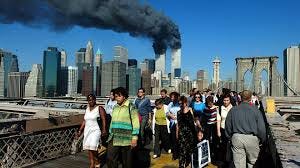
I have known this poem for only a week and it is powerful. Deborah Paradez lives in New York and is professor of creative writing at Columbia University.
Wife’s Disaster Manual by Deborah Paradez
When the forsaken city starts to burn,
after the men and children have fled,
stand still, silent as prey, and slowly turn
back. Behold the curse. Stay and mourn
the collapsing doorways, the unbroken bread
in the forsaken city starting to burn.
Don’t flinch. Don’t join in.
Resist the righteous scurry and instead
stand still, silent as prey. Slowly turn
your thoughts away from escape: the iron
gates unlatched, the responsibilities shed.
When the forsaken city starts to burn,
surrender to your calling, show concern
for those who remain. Come to a dead
standstill. Silent as prey, slowly turn
into something essential. Learn
the names of the fallen. Refuse to run ahead
when the forsaken city starts to burn.
Stand still and silent. Pray. Return.
The stunning impact of this poem is a function of two things: its content; and its form. First the form.
This poem is a villanelle which consists of five stanzas of three lines followed by a single stanza of four lines. It is structured on two repeating rhymes: the rhyme of lines 1 and 3 are maintained throughout the poem. The same words are often used – burn, turn – or new words are introduced - concern, return, learn. All the time, the rhyme at the end of line 2 must be consistent through the poem – fled, bread, instead, shed, dead, and ahead. The four-line stanza at the end incorporates both rhymes. The most famous villanelle is probably ‘Do not go gentle into that good night’ by Dylan Thomas. TS Eliot had the following to say about such a rigid format: ‘…. to use very strict form is a help, because you concentrate on the technical difficulties of mastering the form, and allow the content of the poem a more unconscious and freer release’. This certainly seems to happen here for Deborah.
Second, the content is superb and stirring. When disaster strikes, do not run. Do not join the panic-stricken mob and scurry off. Turn your thoughts away from escape. Turn and behold the ruins, mourn the collapsing doorways, surrender to your calling, show concern for those who remain. Learn the names of the fallen.
How likely is this? How many images do we hold in our heads of people fleeing burning ruins in the background?
Yet, consider the forsaken city as something not so big as a city, rather something large for us as an individual, such as the life of a friend in jeopardy, a relationship in ruins, emotional distress in the face of one who is for some reason compromised. Now the poem makes complete sense in its urging of us to slow down, pause, pray, reflect and ultimately confront the disaster in our lives. Do not scurry away, rather turn into something essential. This is the more responsible and dignified response.
Thus, the poet motivates us to confront the broken landscapes of our past, present and future as it is only in that reckoning that we can move forward with strength and self-awareness.
So, when disaster strikes: ‘Stand still and silent. Pray, Return.’